

In 2023, Sierra Interactive has continued to make waves in the real estate industry with its cutting-edge website and CRM solutions. Known for its feature-rich offerings, this platform provides real estate professionals with the tools they need to manage leads, enhance customer relationship management, and streamline their overall business operations. Sierra Interactive has solidified its reputation as a leader in this sector by focusing on innovation and excellence.
This comprehensive review will analyze the platform’s features, capabilities, and pricing. Prospective users can expect to gain valuable insights into how Sierra Interactive compares to its competitors, such as Kunversion/KvCore, and BoomTown. Moreover, the review highlights critical updates and improvements that have been made throughout the platform, ensuring that readers have all the information they need to make an educated decision.
As the real estate industry grows increasingly competitive, it is essential for professionals to stay ahead of the curve by leveraging cutting-edge technology to streamline their work. This review equips them with the knowledge necessary to determine if Sierra Interactive’s platform fits their needs. Ultimately, it is a valuable resource for those seeking to enhance their real estate business and remain at the forefront of this ever-evolving industry.
Sierra Interactive is a company that specializes in providing real estate agents and brokers with CRM (Customer Relationship Management) software and websites designed specifically for their industry. In 2023, their products continue to evolve, offering real estate professionals a suite of tools to enhance their business in several ways.
The Sierra Interactive CRM software is built to help real estate professionals manage their leads effectively. It is designed to accommodate leads from various sources, such as websites, ads, or lead providers, ensuring that all potential clients are tracked and nurtured within the system. Additionally, the CRM offers automation features, allowing agents to streamline their follow-up processes and improve their speed-to-lead.
On the website side, Sierra Interactive offers powerful IDX websites optimized for SEO, enabling agents to rank highly on search engines and attract more organic traffic. These websites come with fully integrated brokerage reporting, managed PPC campaigns, and even an integrated dialer, making it a comprehensive solution for real estate professionals.
In addition to these core features, Sierra Interactive provides users with numerous additional tools to help them better manage their businesses. For example, purpose-built marketing features help agents stay in front of leads and move deals along quickly. Agents can also utilize the CRM’s capabilities to segment their leads and create personalized follow-up strategies based on lead preferences and interactions.
In summary, the 2023 Sierra Interactive Website and CRM offer real estate professionals a robust and flexible suite of tools designed specifically for their industry. With its wide range of features and tailor-made solutions, agents can optimize their workflow, manage their leads effectively, and ultimately grow their business.
Sierra Interactive offers a comprehensive property search and listing integration that allows users to showcase available properties on their websites easily. This includes IDX integration for pulling data from local MLS databases and providing users with the most up-to-date property listings. Features such as customizable search options saved searches, and favorite property listings enable a user-friendly browsing experience for potential buyers and clients.
One of the Sierra Interactive platform’s primary objectives is to generate and manage leads effectively. With its built-in CRM, the system provides tools for tracking and nurturing leads that originate from various sources. Features such as lead capture forms, visitor tracking, and notifications ensure that new leads are properly captured and managed within the user’s database. The CRM also allows for easy organization and categorization of leads, helping agents prioritize their efforts.
Sierra Interactive provides users with various automated marketing tools designed to help agents stay connected with their leads and clients. Some of the key features include:
To help users gauge the effectiveness of their website and marketing efforts, Sierra Interactive includes reporting and analytics functionalities. The platform offers brokerage reporting that can help users track their performance in areas such as lead generation, lead conversion, and agent productivity. Additionally, the platform integrates with Google Analytics, allowing for a deeper understanding of website traffic patterns and user behavior. By providing insights and data-driven reports, users can make informed decisions on improving their online presence and better serving their clients.
Sierra Interactive’s 2023 platform offers a visually appealing and customizable website design. Users can choose from various templates, colors, and layout options to create a website that aligns with their brand identity. In addition, the platform provides built-in customization tools and allows for the incorporation of custom code, enhancing both aesthetics and functionality. This flexibility is essential for businesses as they can easily adapt their website design to meet evolving market trends and user preferences.
In today’s digital landscape, mobile responsiveness is crucial for ensuring that visitors can easily navigate a website and access its content on various screen sizes and devices. Sierra Interactive’s 2023 Websites and CRM platform recognizes this need and provides mobile-optimized designs that automatically adjust to different screen sizes, whether it be a smartphone, tablet, or desktop device. By offering a seamless user experience across devices, businesses can cater to the growing number of mobile users and maintain their website’s functionality on various platforms.
Sierra Interactive’s 2023 platform strongly emphasizes user experience and interface by offering customizable website design options and ensuring mobile responsiveness. These features improve the overall look and feel of the website and cater to the diverse needs of online visitors and potential clients. The platform’s ease of use and adaptability sets it up nicely for supporting businesses in the ever-changing digital landscape.
Sierra Interactive offers various pricing plans tailored to individual needs, ensuring that customers get the best possible value for their specific requirements. The platform is designed for real estate professionals seeking efficient CRM and website solutions.
One notable plan is the Pro Site, which starts at $399.95 per month and comes with a $250 setup fee. This plan is targeted predominantly toward buyers, providing a comprehensive set of tools and features to help real estate agents convert leads and close deals more effectively.
In addition to the Pro Site, Sierra Interactive also offers the Ace plan, priced at $499.95 per month. This plan is tailored towards sellers, with a homepage optimized for promoting market trends and home valuations. By focusing on the seller experience, the Ace plan ensures that agents can effectively manage the demands and expectations of their seller clients.
Some features and services that Sierra Interactive provides across its plans include:
In summary, Sierra Interactive offers a range of pricing plans suitable for various needs and budgets. The Pro Site and Ace plans cater to buyers and sellers, respectively, and both plans include a host of valuable features to help real estate agents convert leads and close deals more efficiently.
Sierra Interactive offers a range of customer support and resources to help users make the most of their CRM and website platform. One notable aspect of their support is the availability of live chat assistance, where users can quickly contact the support team to resolve any issues or get answers to their questions.
Additionally, Sierra Interactive provides extensive documentation and resources through its Help Center. The Help Center includes a comprehensive set of articles and tutorials addressing common concerns and guiding users through various platform aspects. These resources are designed to empower users to troubleshoot issues and optimize their experience with the Sierra Interactive platform.
In terms of training, Sierra Interactive organizes regular webinars and training sessions, allowing users to stay updated on new features and best practices. These opportunities for learning contribute to a more robust understanding of the platform and how it can be utilized effectively.
Furthermore, Sierra Interactive features a community forum where users can connect, share experiences, and seek advice from fellow users. This engaging, collaborative environment enables users to learn from one another and discover novel ways to use the platform to achieve their goals.
To summarize, Sierra Interactive’s customer support and resources include the following:
Sierra Interactive offers a comprehensive real estate platform that includes several notable benefits. One key advantage of their platform is its affordability, with a low setup fee of $250 and monthly plan options for both buyer and seller experiences.
Another positive aspect of Sierra Interactive is its website customization options. Each website has a unique design that allows users to showcase their brand personality while ensuring a pleasant browsing experience for site visitors.
Additionally, Sierra Interactive’s websites consistently perform well in terms of SEO, making it more likely for their clients to appear on the first page of search engine results.
Despite the advantages, there are some drawbacks to consider when choosing Sierra Interactive. While the platform offers a significant degree of customization, the variety in design quality can lead to inconsistent user experiences across different websites. This might particularly affect businesses that don’t have a strong designer on their team to ensure optimal site appearance and functionality.
Another potential downside is the lack of a built-in paid ad option, which could limit the growth of your real estate business online. Some of Sierra Interactive’s competitors provide ad features that can be easily scaled as your business grows, giving them an edge in this area.
Overall, Sierra Interactive provides a solid real estate platform with many advantages and disadvantages, depending on your specific needs and requirements.
A: Sierra Interactive integrates seamlessly with your real estate business by providing a full suite of features designed to help you excel in every area, from lead generation and follow up to property listings and website design.
A: Sierra Interactive stands out as a top option in the world of real estate CRMs due to its advanced features like action plans, assignment, and automation. It also offers powerful integrations with various other software options and provides a great user experience with excellent onboarding, making it easier to switch from other CRMs like Follow Up Boss or Real Estate Webmasters.
A: Yes, Sierra Interactive can help you increase your organic traffic as it is a website provider that goes above and beyond. Their website design is visually appealing, mobile-responsive, and optimized for SEO. The platform also offers integrations with Google PPC and other services to help you drive more traffic to your site.
A: Sierra Interactive offers a variety of advantages for real estate professionals, including lower cost per lead, advanced features to help you close more deals, and integrations with other software like RubyHome and Follow Up Boss. The platform also offers excellent website design and a mobile app for easy access on the go.
A: The onboarding process with Sierra Interactive is straightforward and intuitive, with helpful resources and support throughout the entire process. You’ll also have access to a wide range of training materials to help you get the most out of the platform.
A: Yes, Sierra Interactive can help you generate more real estate leads by providing advanced lead gen features, integrations with other software, and excellent website design to attract and retain potential clients.
A: Sierra Interactive stands out among other top real estate CRMs due to its powerful features, excellent user experience, and integrations with other software. The platform is designed to help real estate teams of all sizes grow and succeed.
A: Yes, Sierra Interactive can be an excellent option for luxury real estate professionals due to its high-quality website design, advanced features, and integrations with other software like Google PPC to help drive traffic and generate leads.
A: Yes, Sierra Interactive provides a wide range of customization options for website design, allowing you to customize fonts, colors, and other design elements to make your brand stand out.
A: Users generally have positive experiences with Sierra Interactive, praising its advanced features, integrations, and website design. Some users note high cost per lead, but overall, the platform is a powerful tool for real estate professionals looking to grow and succeed.
This 2023 Sierra Interactive Website and CRM review thoroughly analyzed several key features and updates. One of the prominent aspects is that Sierra Interactive is an affordable all-in-one platform with a starting price of $399.95 per month for its flagship Pro Site, which focuses on attracting buyers.
When comparing their website templates, it became apparent that Sierra Interactive offers contemporary and uncluttered designs. Although the customization options may be limited, the overall aesthetic of the templates is visually appealing and user-friendly.
Some noteworthy updates were unveiled in a video review of the platform, highlighting the latest website and CRM features for 2023.
To sum it up, Sierra Interactive’s Website and CRM offer a solid solution for real estate professionals seeking an affordable, visually appealing platform with robust features. Users can streamline their workflow by choosing Sierra Interactive and enhance their online presence in the ever-competitive real estate market.

Social media has become a handy and low-cost marketing tool. It is on these platforms that a company can find Read more

All real estate professionals share a mutual goal: to get and convert more leads, thus, grow their real estate business. Read more

Here are seven killer tips that you can use to create high-converting real estate Facebook ads Real estate agents know Read more

LinkedIn is a very important part of social media marketing. So how can you stand out from the crowd as Read more

We get asked this question a lot through our podcast and YouTube video we make for the industry, and we totally understand why so many agents ask this question; all top real estates trainers like Tom Ferry or Jimmy Burgess say that if you went to be successful in the industry, you need to use CRM and we agree with this statement because when you look at the data one of the most significant facts that you see is how poor most agents are connected to following through consistently with possible new leads and also keeping in contact with their existing database, if they have a database, of past clients and people they talked to and had some relationship with see being a real estate agent is a people business.
One of the main problems connected to recommending the best CRM for a single agent or a small team is the term has, over the years, become slightly “devalued” What do you mean by this statement? Well, there are all types of CRM, from ones that include a website and are more focused on lead generation to others that learn more about client relationship management. Then you have what I call the “Swiss army knife” solutions that try and do everything in one package but, unfortunately, in my experience, end up doing nothing that exceptionally well.
Then you have some semi-popular real estate agent CRM platforms that were initially aimed at the more broker-level kind of set-ups that had an in-house full-time digital marketing manager but are now being sold to single agents or small teams; an example of this is KVCore which is my humble option isn’t an excellent choice for the single or small team office.
Another critical feature to look out for when selecting a CRM is integration with other tools and applications like calendars, social media platforms, or marketing software. This enables you to manage all aspects of your work within one system while reducing resource expenses on disconnected systems that don’t communicate well together.
Customization options are also essential as they enable unique functionalities specific to the agency’s needs, thereby increasing efficiency in task performance.
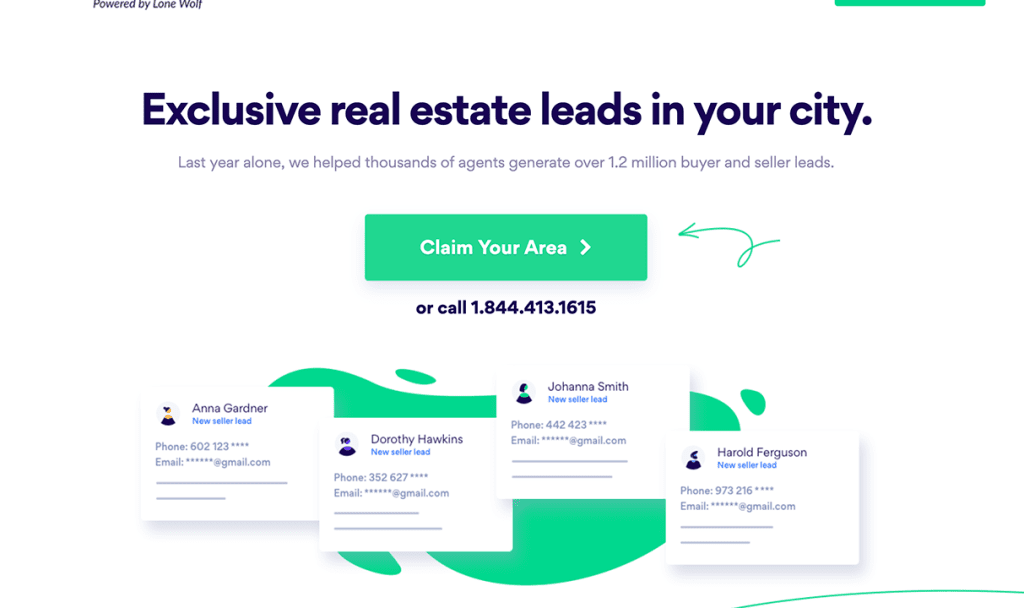
Not only does BoldLeads furnish both the buyer and seller leads, it also lets you choose whether to market your product or service to consumers who will be either buying or selling. Some reviews note that the buyer leads are more successful than the seller leads, but it also holds true with most leads.
Prices start at Lite $269 | Professional $399 | Advance $649
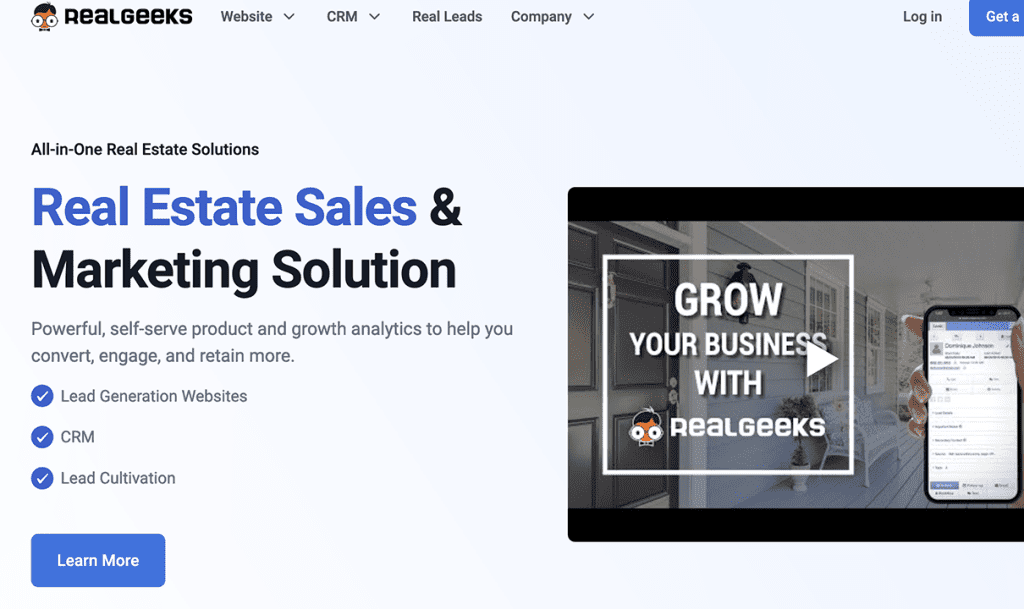
Like some of the other top real estate client relationship management systems, RealGeeks offers a full mobile-to-closing ecosystem, including a website and lead-gen tools designed to make lead capture more effective for a single real estate agent’s website. We find that RealGeeks beats out the competition as a comprehensive one-stop solution for real estate agents.
Prices are $299 monthly for one or two users, plus $25 per month for each additional user and a one-time $250 startup fee.
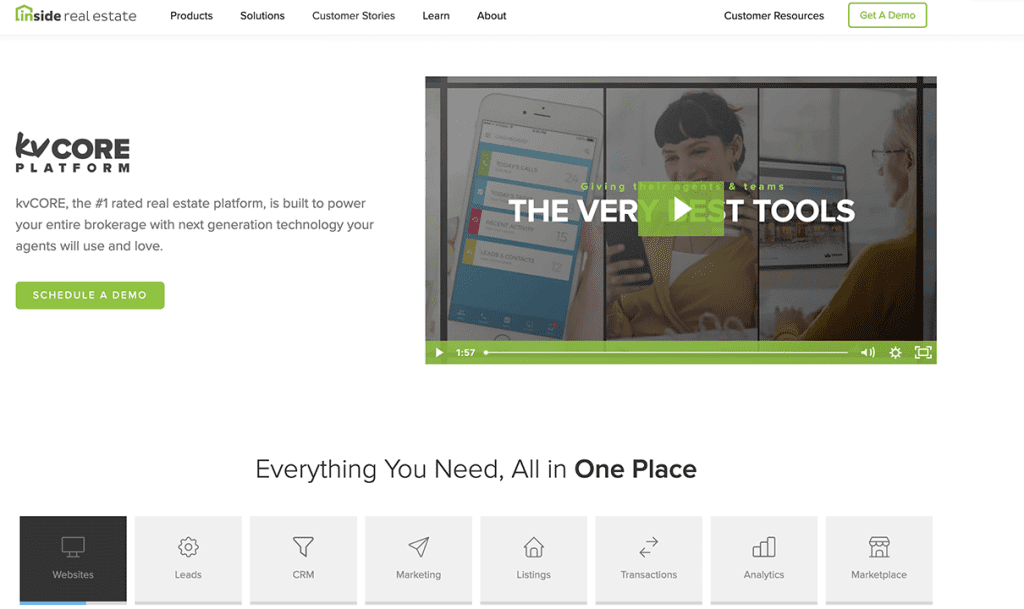
KVCore is a powerful all-in-one cloud-based customer service management platform from Inside Real Estate, an independent tech company specializing in innovative tech solutions for the real estate market. The Inside Real Estate company has 170 workers and is among the fastest-growing tech firms in the industry.
1- 2 users start at $499 per month with a 12-month commitment and an initial set-up cost of $999
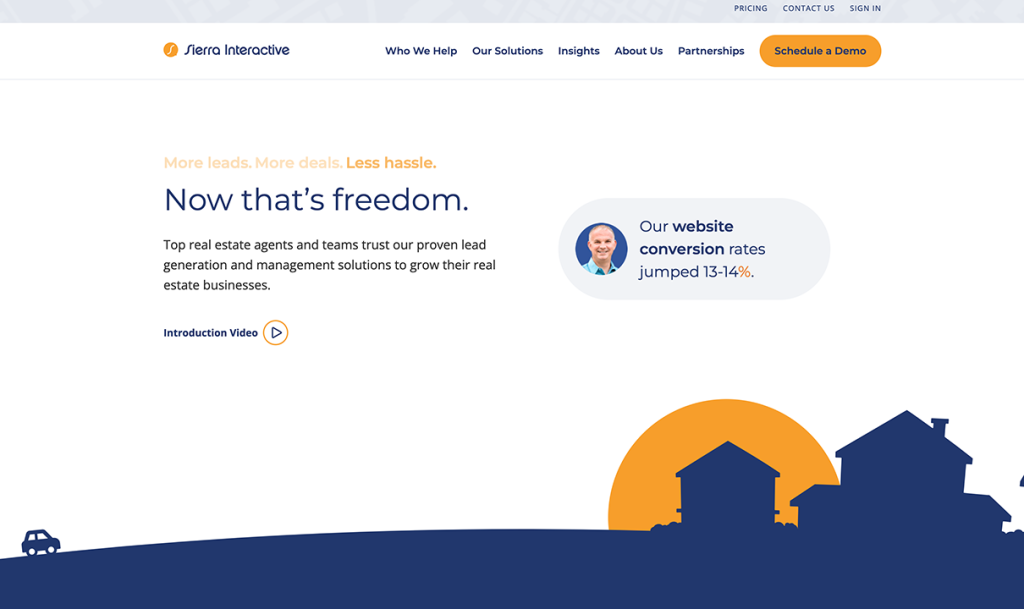
To keep your business growing as you scale, you’ll want a CRM system with an integrated real estate website builder that generates leads, automatically populates them within your system, and sends you high-end lead conversion opportunities. Sierra Interactive is that unicorn, all-in-one sales ecosystem. It works as a truly robust CRM generator with first-class lead generation capabilities and ad management options.
$250 per month plus a set-up fee of $399 per month
https://www.sierrainteractive.com
Grow $69 | Pro $499 | Platform $1,000
When it comes to choosing a real estate CRM, pricing analysis is an important aspect to consider. While most companies offer affordable packages with basic features, checking for hidden costs that can add up in the long run is critical. For instance, some platforms may charge extra fees for additional users or access to premium features such as advanced reporting or automation tools.
Another hidden cost often overlooked is training and support. Some CRMs require extensive onboarding that can take weeks or even months before you’re fully equipped with the software for daily use. This means investing additional resources into staff training and education, significantly adding to the time and money spent.
Ultimately, when doing a pricing analysis of popular real estate CRMs, it’s essential to compare upfront costs and consider any potential post-sale charges or unanticipated expenses that could arise down the road. By doing so, you’ll be able to make an informed decision based on your budget and specific needs without encountering surprises later on.
A: CRM software stands for Customer Relationship Management software. It is a tool designed to help businesses manage customer interactions and streamline communication between team members and clients.
A: Real estate agents need a CRM software to help them manage client interactions, keep track of leads, automate lead generation, and simplify communication between team members. A CRM can also provide valuable insights on client behavior and help agents make data-driven decisions.
A: There are many CRMs for real estate available on the market. Some of the best include Real Geeks, Zoho CRM, Hubspot CRM, and many more. The best CRM for real estate will depend on the specific needs of a business and its budget.
A: The benefits of using a CRM for real estate include: organizing and streamlining communication, managing leads, automating lead generation, providing valuable insights on client behavior, and simplifying workflow for team members. It can also help agents improve client relationships and ultimately close more deals.
A: A good CRM for real estate will have basic features such as client management and lead generation. The best CRM for real estate will have additional features such as customizable templates, automation tools, reporting functions, and integrations with other software.
A: To choose the right CRM for your business, assess your specific needs and budget. Look for a CRM that is designed specifically for the real estate industry and offers features that help automate lead generation, manage client interactions, and provide valuable insights on client behavior.
A: Yes, many CRMs for real estate offer free trials, including Real Geeks, Zoho CRM, and Hubspot CRM. Take advantage of these free trials to test the software before committing to a purchase.
A: The best overall CRM for real estate will depend on a business’s specific needs and budget. However, Real Geeks and Zoho CRM consistently rank among the top CRMs for real estate due to their comprehensive features and ease of use.
A: Yes, many CRMs for real estate offer customizable templates and integrations with other software. Customizable features allow businesses to tailor the CRM to their specific needs and workflow.
A: Yes, there are all-in-one CRMs for real estate that offer a comprehensive suite of features such as lead generation, client management, and reporting functions. Real Geeks and Hubspot CRM are examples of all-in-one CRMs for real estate.
In conclusion, choosing the best real estate CRM requires careful consideration of targeted services being offered by information technology firms in this arena. It’s imperative always to balance pricing models against features required and budget constraints so that selection criteria align optimally with business goals for growth while minimizing the disruption caused by redundant activities already carried out independently outside its purview, otherwise leading towards redundancy affecting profitability negatively over time if not addressed quickly enough.
Social media has become a handy and low-cost marketing tool. It is on these platforms that a company can find Read more
All real estate professionals share a mutual goal: to get and convert more leads, thus, grow their real estate business. Read more
Here are seven killer tips that you can use to create high-converting real estate Facebook ads Real estate agents know Read more
LinkedIn is a very important part of social media marketing. So how can you stand out from the crowd as Read more

Email marketing is a cost-effective way to connect with your audience. Here are some tips to help you improve your email marketing campaign. Don’t send too many emails. If you have something important to say, say it once and say it well.
Don’t use only links in your email content. Links should be a secondary component of the message conveyed through the body copy of an email. Use personalization as much as possible. Personalize your subject line based on who is receiving it and what they’ve been doing with their time on your site recently (e.g., if they’re looking at property listings or just emailed you).
Monitor how people interact with your emails.
If someone doesn’t open or click one of your emails, the chances are good that person isn’t interested in hearing from you right now — so look at why this may be happening and try not to repeat the same mistakes again next time around! Keywords: Real Estate Agents Email.
#1 – Do Your Subject Lines Suck? (either underpromise or overpromise)
#2 – Do your emails offer any real value? (value is a semi-complicated measure)
#3 – Are you overly relying on email marketing automation without really understanding it? This will limit your results! Create strategic email lists like a highly personal touch list, a mid-level touch list, and a totally automatic marketing list (generic list). This is all linked to one word, “segmentation.”
#4 – Are your emails mobile-friendly? Email is being dominated by mobile device usage, and you need to make sure that your email is “mobile-friendly.”
#5 – Do you randomly send out your emails on different days and hours and at random times during each month? Timing is all-important and connects to sending the right email at the right time, even on the right days.
#6 – Are your emails segmented? This is all linked to one word, “segmentation,” and how important it is not just to use one generic, random list.
#7 – Are you using a CRM? We have another video where we talk about different CRMs, but sending mass emails from an Outlook or Google account can get you into trouble because of the lack of unsubscribe tools and options. Protect yourself and your business by using an established CRM like what’s part of Mail-Right’s plans.
If you’re not writing good subject lines, you are losing money. Subject lines make or break your open rates and click-throughs. And if that is low, then your campaign performance will suffer too. Don’t be the victim of a bad subject line. ‘Good’ is relative. Your audience may define good differently from someone else’s audience.
Figure out what works for you and make it the norm. To do that, you can learn a lot from your competition (you know — those people who just don’t seem to be as smart or hard-working as you). Try to figure out why their emails get more opens and click-throughs than yours. Did they use an attention-grabbing subject line? Did they offer a discount?
Or maybe, in some way, did they connect with their audience on a personal level? With every email campaign you run, ask yourself: ‘What worked well here? Why did this work so well?’. Then, apply those insights to future campaigns. When your subject lines consistently outperform the others, you know that defines ‘good’ for your audience.
How many of your emails do you open? How many are read in full? This is difficult to answer because there isn’t any accurate way to measure it. For example, you could create an automated email that says, “click here if you opened this email,” and that would count as being opened.
However, we know from experience that people will click on links even when they don’t want to, so the annoying message goes away! So how can we get a more accurate measurement of what percentage of our emails are actually read by our audience? Your best bet is to ask for feedback from your customers or potential customers.
You can also look at other ways your customers interact with you via social media or through customer service channels. While these aren’t as direct, they can give us clues about what works and what doesn’t work with regard to our marketing efforts.
This will limit your results! Create strategic email lists like a highly personal touch list, a mid-level touch list, and a totally automatic marketing list (generic list). This is all linked to one word, “segmentation.”
Automation is all the rage in marketing. So many tools help you automate email messages, social media, and more! But without segmenting your lists (and following up with them), it can be a waste of time and money. Here’s how to create strategic email lists like a highly personal touch list, a mid-level touch list, and an automatic marketing list (generic list). This is all linked to one word, “segmentation.”
We’ll also cover how to set up an autoresponder series and how to follow up with each list. Readers of this blog post will know: 1) How to segment lists for a specific audience 2) How automation can help reach multiple audiences, 3) How to create personalized emails focused on one customer or automated like a newsletter, and 4) What tools exist for email marketing automation.
The post is also targeting bloggers who are hoping to expand their business into other industries. Searching for the keyword “real estate” and the word “blogging” will give you specific help on starting a blog for your real estate industry or expanding your business by moving into blogging.
It is essential to market your products and services in today’s business world using all available means. Mobile devices are the fastest-growing way to access email, and it is important that you make sure your emails look good on these screens.
The use of responsive design is the best way to ensure that your email marketing messages are viewable by all. Your audience will appreciate you taking the time and effort to ensure they can read your emails clearly and easily. Use this tactic: Place keywords in your blog post, title, subheadings, image alt tag, and so on. Use a keyword density checker to make sure you’re using them often enough (but not too much).
Include a summary of your content at the end of each blog post that lists all keywords you used in it (use anchor text links for internal linking). Add a listicle at the end that includes 5-6 bullet points with hyperlinked keywords using anchor text links for internal linking. This is an effective technique to drive traffic from social media platforms such as Facebook or Twitter through hashtag searches.
Timing is all-important and is connected to sending the right email at the right time, even on the right days.
What are the best days and times to send out your emails? Are you scheduling them randomly, or are you actually analyzing your email marketing data and sending out emails on the most effective days and times?
What is the best day and time to send emails? According to the data in this chart, Mondays are a great day for email marketing. The best time of day to send an email is 11:00 a.m., with the highest open rate being from 11:30 am – 12:00 pm.
It seems that Tuesday through Thursday has pretty similar open rates, so if you’re not able to send on Monday due to travel or other commitments, I wouldn’t worry about missing out on a big chunk of leads. Also notable is Friday’s lower open rate; perhaps sending emails at 1 p.m. (with a slightly shorter subject line) may be more effective than 2 p.m.-4 p.m.
What does all of this mean? When you look at your own email marketing results, pay attention to when and how people open your emails and use links within them. You want your emails to get read, so tune in weekly.
This is all linked to one word, “segmentation,” and how important it is not just to use one generic, random list.
There are a lot of misconceptions about email marketing. People assume that it’s old-fashioned, ineffective, and time-consuming. If you’re running an online business or if you have an e-commerce site, then this post is for you!
I’ve compiled a list of the best email marketing tools that you can use to boost your sales. I will also show you how to use these tools in detail. So without further ado, let’s get started! No matter what industry you’re in, email is an invaluable resource for every business. In fact, it accounts for $40-60 billion of revenue worldwide every year! But if used incorrectly, it can also lead to serious problems and lost customers.
And that’s why we want your business to succeed – so here are our top 10 tips on how to use email marketing effectively: 1) Add personalization 2) Know your customer 3) Build an audience 4) Track results 5) Automate 6) Include images 7) Start with cold emails 8 ) Personalize again 9 ) Send creative subject lines 10 ) Use the appropriate tone
We have another video where we talk about different CRMs, but sending mass emails from an Outlook or Google account can get you into trouble because of the lack of unsubscribe tools and options. Protect yourself and your business by using an established CRM like what’s part of Mail-Right’s plans.
It is important to have CRM (Customer Relationship Management) software in place when doing email marketing.
If you intend to use email marketing in your real estate business, then it is important that you have CRM software installed. Use the most popular names –lead generation and property management software.
Lead generation and property management software are the best in terms of CRM. Use the title to address your audience informally. Use the “Content” to define what you are offering, then use the “Keywords” to incorporate those keywords throughout your blog post.
How to Find and Buy a Home in Your Budget. Keywords: house buyer, home buying, buying a house. Content: Buying a home is an important life decision, and it can be very stressful –there are so many things that you need to consider when buying your first home. It pays to learn as much as you can about the process before you start looking for your dream home. Use the most popular names –home loan calculator, mortgage calculator, and city comparison website.
Use these sites to help you find out how much you can afford to spend on your next home purchase so that you will not go beyond your budget range when making this important purchase. The more prepared you are with information on the subject, the better it will be for your pocket –after all, knowledge is power! Use the title to address readers informally, then use the “Content” to define what you are offering them.
Social media has become a handy and low-cost marketing tool. It is on these platforms that a company can find Read more
All real estate professionals share a mutual goal: to get and convert more leads, thus, grow their real estate business. Read more
Here are seven killer tips that you can use to create high-converting real estate Facebook ads Real estate agents know Read more
LinkedIn is a very important part of social media marketing. So how can you stand out from the crowd as Read more

Did you know that 85% of new agents leave the industry in less than 2 years? How can you avoid being one of these failed agents? Just listen to these 4 key points that will help you be one of the winners in the real estate industry.
#1 – Real estate agents, you need to choose the broker that’s right for you at your particular time.
#2 – Real estate agents, you need to build successful local referral relationships.
#3 – Real estate agents, you need to find a local niche in the local market.
#4 – Real estate agents, you need a great website.

Real estate is a very lucrative industry, and as a realtor, you want to be sure that when you make a recommendation, it is going to be the best person or company available. You want to make sure that they will be dedicated to your area and focused on getting your business. You also want to be able to trust them with your reputation within the community. If there are any concerns or questions, we will work through them together before making a decision on who can best serve our needs together. This can help alleviate any problems before they occur. We also have access to great resources like online training programs and more.

1. Cultivate relationships with businesses in the area such as landscapers, cleaning services, and home improvement stores that will refer their clients to them when they are looking for a real estate agent.
2. Use landing pages to help you capture information about the properties their customers want to sell and convert those into Lead Forms which provide additional contact information about their potential clients.
3. Use your website to provide additional marketing materials (brochures, video tours, etc.) that give homes an edge when presented by another agent or on MLS listings.
4. Sell properties faster!

Real estate agents, you need to find a local niche in your local market. This helps you to reach customers that are already interested in your area. When you advertise yourself as a realtor who knows the local market well and is from the community, this is what sells homes. You need to be able to offer customers something unique that differentiates you from the competition. Localization is one of the most important factors in marketing. The first step a real estate agent should do is to identify their local market and understand the needs of the customers in that area. Do they want a big house? Are they looking for a house with flat or mansion-like style? Do they prefer living near nature or in the city?

Your website is the most important tool in the real estate business. A bad website will cost you money, reduce your sales and harm your reputation. If you are a real estate agent with a bad website, then it’s time to replace it with a modern one that will sell your properties and help you get more clients. In this case study, we will discuss how we can improve page titles and meta descriptions for better SEO performance for a Real Estate Agent Website (a sample target keyword). We will learn the following topics.
Social media has become a handy and low-cost marketing tool. It is on these platforms that a company can find Read more
All real estate professionals share a mutual goal: to get and convert more leads, thus, grow their real estate business. Read more
Here are seven killer tips that you can use to create high-converting real estate Facebook ads Real estate agents know Read more
LinkedIn is a very important part of social media marketing. So how can you stand out from the crowd as Read more
Google Local Services Ads is a specialized advertising program that allows real estate agents to reach potential buyers and renters in the area they want. It is an affordable way for small businesses to get their name out there, something that was not possible before Google gave customers this opportunity.
The platform allows real estate agents to create ads that target potential clients based on certain keywords, locations, the price range of the house or apartment listed, and even features like “pet-friendly” and “pools.” The size of the ad itself can be chosen as well as how often it is supposed to appear on Google searches. Real estate agents can also choose which device (desktop, laptop, etc.) they want their ad to appear on.
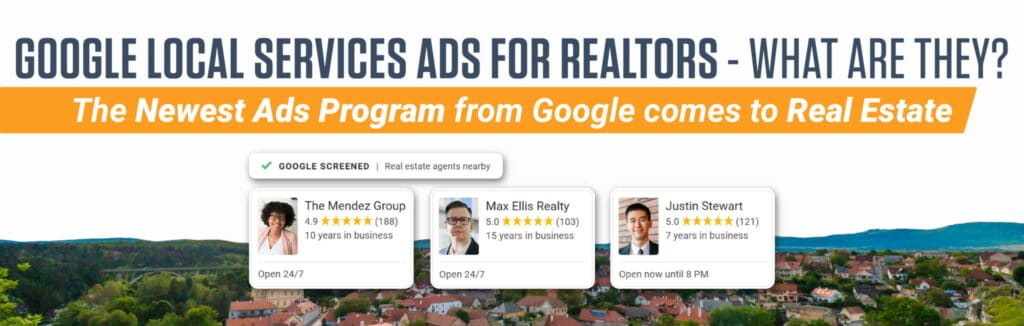
Google Local Services Ads (LSA) is an online advertising platform that Google has been offering to real estate agents for the past couple of years. This article will discuss what exactly LSA’s are, why they are so important for real estate agents, and why every agent should be using them in their business. This article will also discuss the importance of reputation management in real estate and how you can use LSA’s to help build your brand.
What Are Google Local Services Ads? Google Local Services Ads (LSA) are a way for Google to connect its AdWords users with businesses that offer services that are closely related to the keywords being searched for by consumers. This is an important distinction from other forms of online advertising because this platform targets businesses that have a direct impact on consumers’ lives, as opposed to something like banner ads or Facebook adverts which only target visitors based on their viewing habits or demographic information. As of right now, there are two types of LSA – “Placement Related” and “Shopping Related.” Placement-related ads show up when someone searches for a service category or location-specific terms such as a service provider name or company name.
Shopping-related ads show up when someone is searching for products or services that they would like to buy immediately, rather than services that they need at some point in the future. Why are LSA’s important? There are many reasons why LSA’s are important for real estate agents, but the key reason is that they allow you to reach out to potential clients while they are actively looking for a service that you can provide them with. This means that if you can rank well and stay on top of all the relevant keywords, then you will have a high probability of getting quality leads from your advertising campaign.
Getting quality leads has never been easier! When Google allowed real estate companies to advertise on Local Services in 2010 it was revolutionary because it allowed for agents to compete with larger online portals such as Zillow or Realtor.com where the user experience was lackluster at best and oftentimes misleading. Nowadays, large online portals still exist, but there is no greater way for an agent to get their name out there than through paid search marketing campaigns using Google AdWords especially since local SEO has become so vital over the past few years (and will continue to be in the future).
How can real estate agents use LSA? There are many ways that real estate companies can use LSA’s, but there are two main ways I see them being used. The first way is for local SEO purposes and the second way is for lead generation purposes. Local SEO: If you want to rank well on your local SERP, then having a Google Places account is key because it allows you to show up on the map results when someone searches with their GPS-enabled phone or computer, – this will be their first impression of you.
The only problem with Google Places is that the listings are often not as comprehensive as they should be and will often times even have incorrect information on them – this is where LSA comes in. Lead Generation: Even if someone is searching online for a service, they may not know who to call or what to do next. By using LSA (and some other PPC platforms/advertising) real estate agents can drive traffic directly to their site where they can offer a free quote or show clients how much it costs to work with them. If you want to learn more about Google Local Services Ads and how your agency can start utilizing this platform, then I highly recommend checking out our recent video, see below, on the subject, which can be viewed here:

– LSA advertises your property to people who are currently searching for homes and are not necessarily in your area, whereas a Facebook advert can only be viewed by users who have actively searched for the content you have posted.
– The cost of an LSA advert is usually much lower than a Facebook advert because it does not require viewers to click through to another page before viewing your advertisement.
– Since the demographics on LSA are so specific, you will find that the audience matches exactly with your ideal customer – leading to better conversion rates.
We have been getting more and more questions about how to get yourself showing up in the Local Search Results if you are a real estate professional. The two most effective ways are having a system of getting great testimonials from your clients or people in your local area that have known you and have done business with you. The second best way is producing what we call quality and informative “Real Estate Agents Content.” This is an effort to provide useful information about local search engine optimization to real estate agents and other local business owners.
We feel LSA’s offer some of the most exciting opportunities for an independent local real estate agent to be able to level up their digital presence so it can effectively match the big boys like Zillow and Red-Fin. However, you really need a holistic approach to your digital online marketing to get the most out of this exciting platform. We at Mail-Right are dedicated to helping agents get the most from the real opportunities that Google LSA offers. If you want to know more about how the Mail-Right system can help you all you have to do is book a free consultation and demo here:
Social media has become a handy and low-cost marketing tool. It is on these platforms that a company can find Read more
All real estate professionals share a mutual goal: to get and convert more leads, thus, grow their real estate business. Read more
Here are seven killer tips that you can use to create high-converting real estate Facebook ads Real estate agents know Read more
LinkedIn is a very important part of social media marketing. So how can you stand out from the crowd as Read more